
IAQ Professional vs. DIY Testing: When Should You Call an Expert?
Indoor air quality (IAQ) plays an important role in maintaining comfortable, healthy indoor environments. From airborne particles and moisture to ventilation problems and chemical pollutants, many factors can affect the air inside homes, offices, and commercial buildings.
With affordable air quality monitors and DIY testing kits widely available, it's easier than ever to collect information about indoor conditions. But how reliable are these tools, and when is it time to consult an indoor air quality professional?
Understanding the difference between DIY testing and professional IAQ investigations can help you make more informed decisions.
What Is DIY Indoor Air Quality Testing?
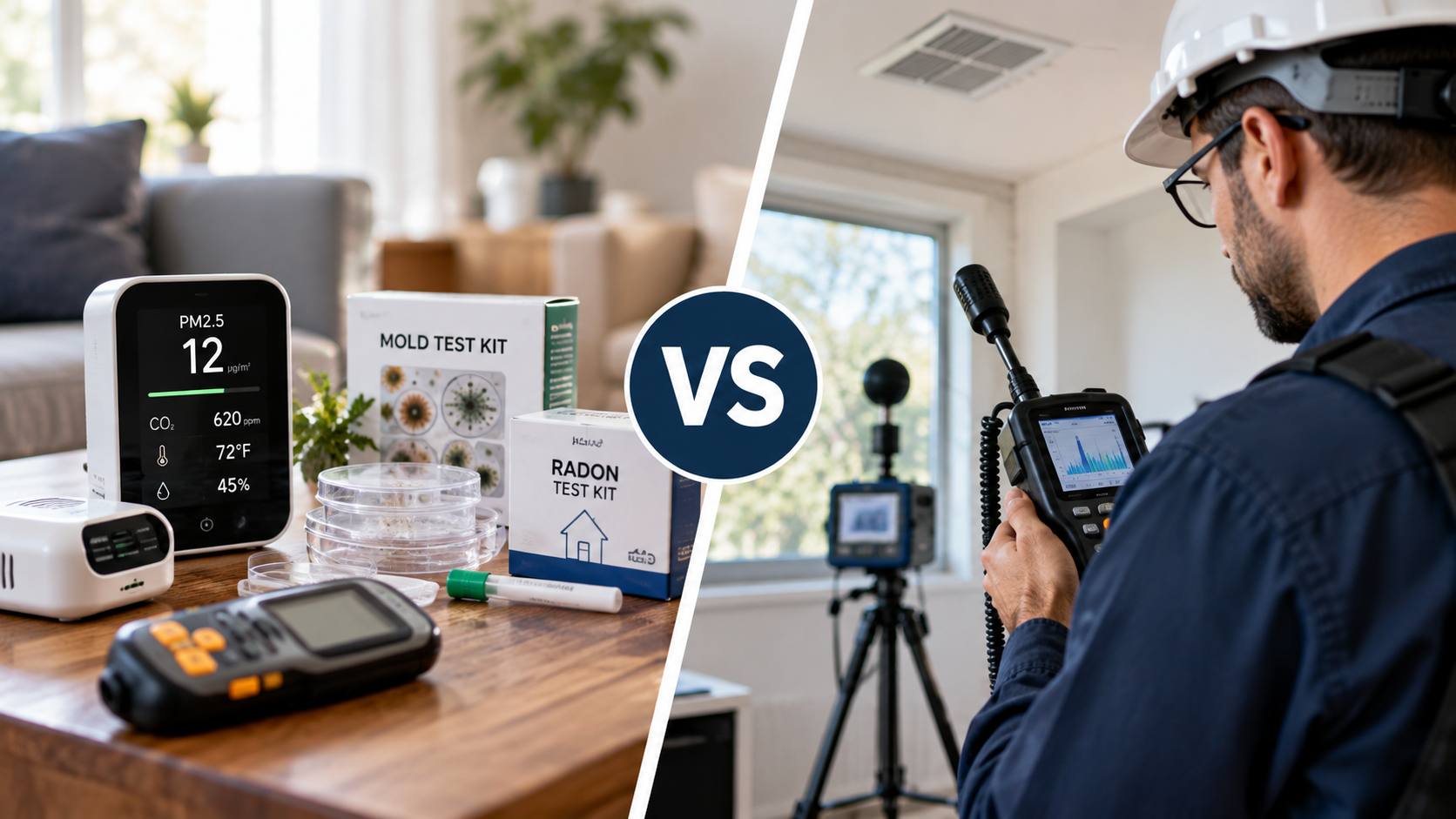
DIY indoor air quality testing involves using consumer-grade devices or testing kits to check certain indoor environmental conditions without hiring a professional.
Common DIY tools include:
- Air quality monitors: Track indicators such as particulate matter (PM2.5), carbon dioxide (CO₂), temperature, and humidity, depending on the device.
- Mold testing kits: Collect samples that may be analyzed for mold, although results can be difficult to interpret.
- VOC monitors: Provide estimates or indicators of certain volatile organic compounds.
- Humidity meters: Help identify moisture conditions that may contribute to mold growth.
- Radon monitors: Measure radon gas (which is odorless, colorless and radioactive) concentrations indoors, either with short-term tests or long-term monitoring.
These tools can be useful for observing trends and identifying conditions that may need further attention. However, they have limitations, particularly when it comes to accuracy, sampling methods, and interpreting results.
What Does an IAQ Professional Do?
An indoor air quality professional takes a more comprehensive approach to evaluating indoor environmental concerns.
Rather than relying on a single reading or test result, a qualified professional considers multiple factors, including building history, ventilation, moisture conditions, occupant activities, and potential pollutant sources.
A professional IAQ investigation may involve:
- Evaluating HVAC systems and ventilation performance.
- Inspecting for moisture intrusion and conditions that support microbial growth.
- Using appropriate instruments and sampling methods.
- Reviewing occupant concerns and patterns.
- Interpreting findings within the context of building conditions.
- Recommending practical next steps based on the available evidence.
The goal is not simply to collect numbers. It is to understand what those numbers mean and how they relate to the building and its occupants.
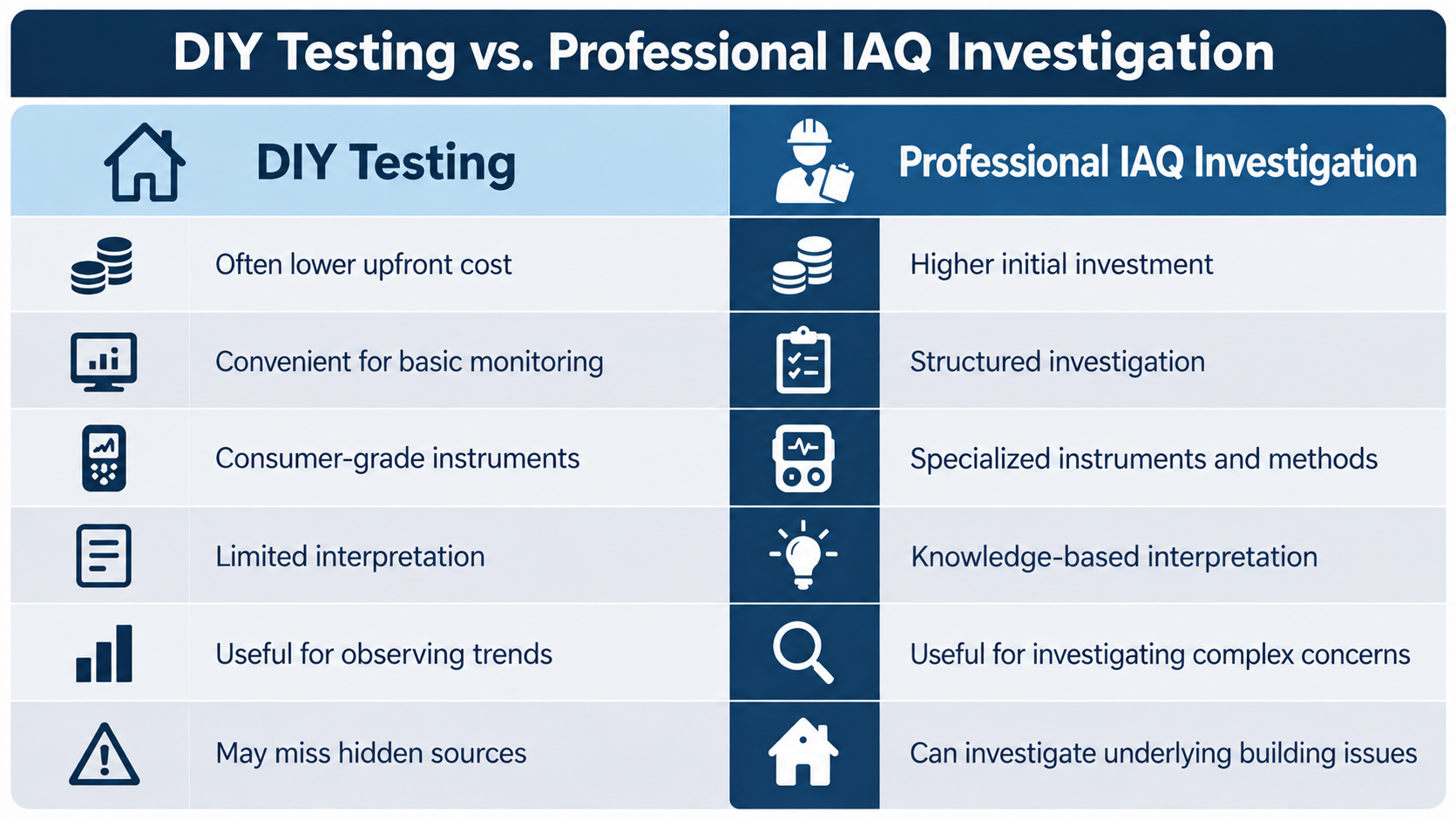
Both approaches can provide useful information, but they serve different purposes.
When Is DIY Testing Enough?
DIY monitoring may be a reasonable starting point when you want to understand general indoor conditions, such as humidity levels, temperature changes, or particle trends during everyday activities.
For example, a homeowner might use a particle monitor to observe changes while cooking or a humidity meter to identify periods of elevated indoor moisture.
However, consumer devices do not necessarily identify specific pollutants or explain their sources. A normal reading also does not guarantee that an indoor environment is free from IAQ concerns.
When Should You Call an IAQ Professional?
Consider consulting a qualified IAQ professional when:
- Persistent or unexplained odors are present.
- Water damage or recurring moisture problems are suspected.
- Visible mold growth or hidden contamination is a concern.
- Ventilation problems continue despite basic adjustments.
- Occupants report recurring concerns that may be related to indoor conditions.
- DIY results are inconsistent, confusing, or difficult to interpret.
Professional assistance is especially valuable when an investigation requires specialized knowledge, reliable measurements, or an understanding of how building systems interact.
Why Proper Interpretation Matters
One of the biggest challenges with indoor air quality testing is understanding the results.
A single measurement rarely tells the complete story. Indoor conditions can change throughout the day depending on occupancy, ventilation, outdoor air, cleaning activities, and building operations.
For example, elevated particle readings may occur during cooking, cleaning, or other everyday activities. Without context, those readings could lead to incorrect conclusions about the source or severity of an IAQ concern.
Effective IAQ investigations connect observations, building conditions, measurements, and evidence rather than relying on isolated test results.
Final Thoughts: The Right Tool for the Right Situation
DIY indoor air quality tools can be helpful for increasing awareness and monitoring certain indoor conditions. However, they are not a replacement for a thorough professional investigation when complex or persistent problems arise.
If you're dealing with persistent odors, moisture problems, suspected mold, or unexplained air quality concerns, connecting with an IAQ professional can help you better understand the situation and determine appropriate next steps.
Not sure where to start? IAQA can help you find a professional.
Explore the Indoor Air Quality Association's Find-a-Pro Directory to connect with IAQ professionals who offer services ranging from assessments and testing to remediation and restoration.
Visit: https://www.iaqa.org/find-a-pro