
Wildfire Smoke and Respiratory Protection: Why N95 and KN95 Respirators Work Better Than Surgical Masks
Wildfire Smoke and Respiratory Protection: Choosing the Right Mask
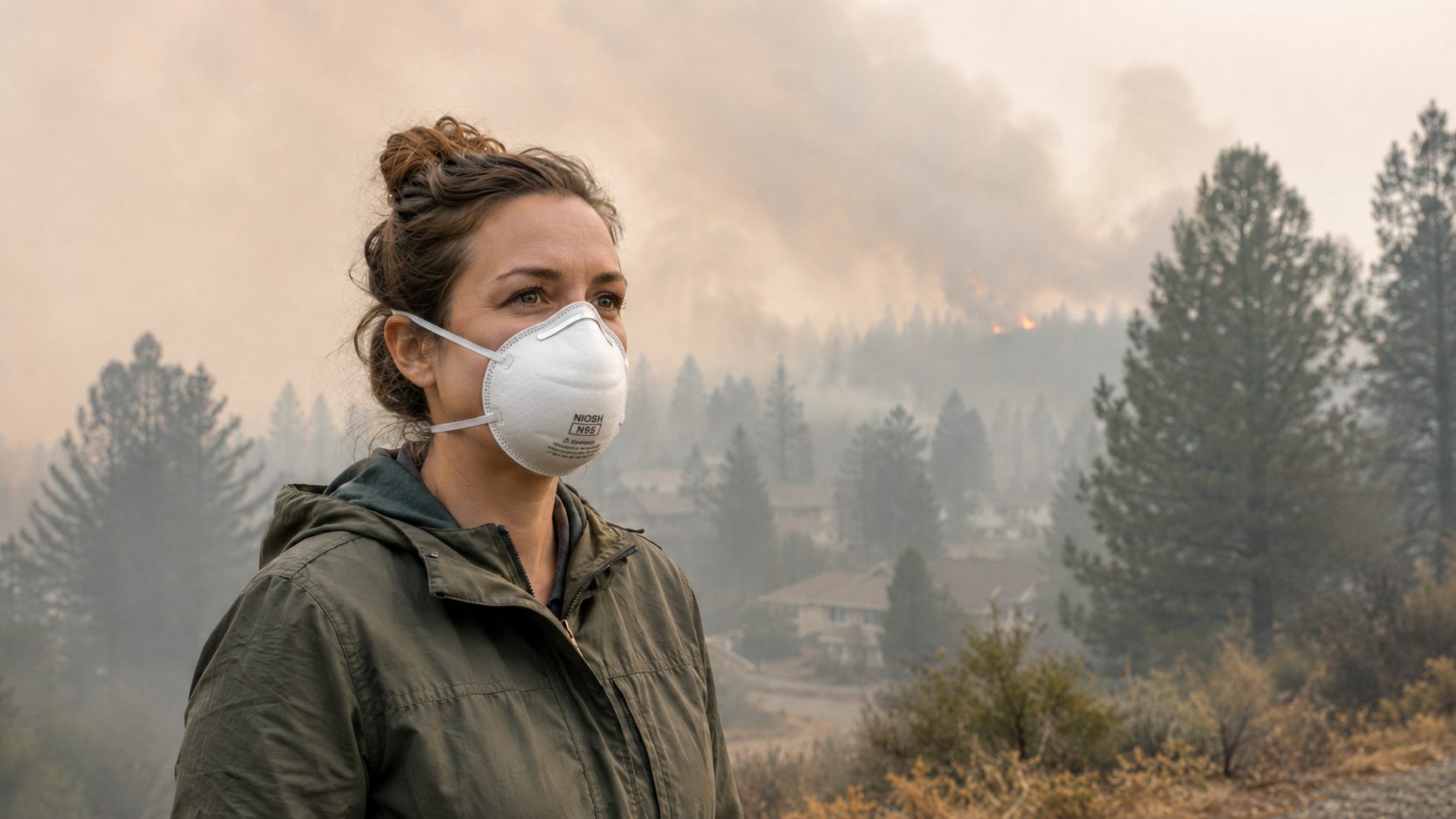
Wildfire smoke can affect communities located far beyond the fire itself. Wind can carry smoke across cities, states, and even national borders, as is happening currently across the Great Lakes and Northeastern US due to Canadian wildfires. The result is poor to hazardous air quality both outdoors and inside buildings.
One of the main concerns in wildfire smoke is PM2.5. These particles are extremely small and can travel deep into the respiratory system. Exposure may irritate the eyes, nose, throat, and lungs. It can also worsen asthma, heart disease, and other existing health conditions.
When outdoor air quality becomes unhealthy, reducing exposure should be the first priority. Staying indoors, keeping windows closed, using effective air filtration, and avoiding strenuous outdoor activity can all help. When going outside is necessary, wearing the right respiratory protection is important.
Why N95 Respirators Provide Better Protection
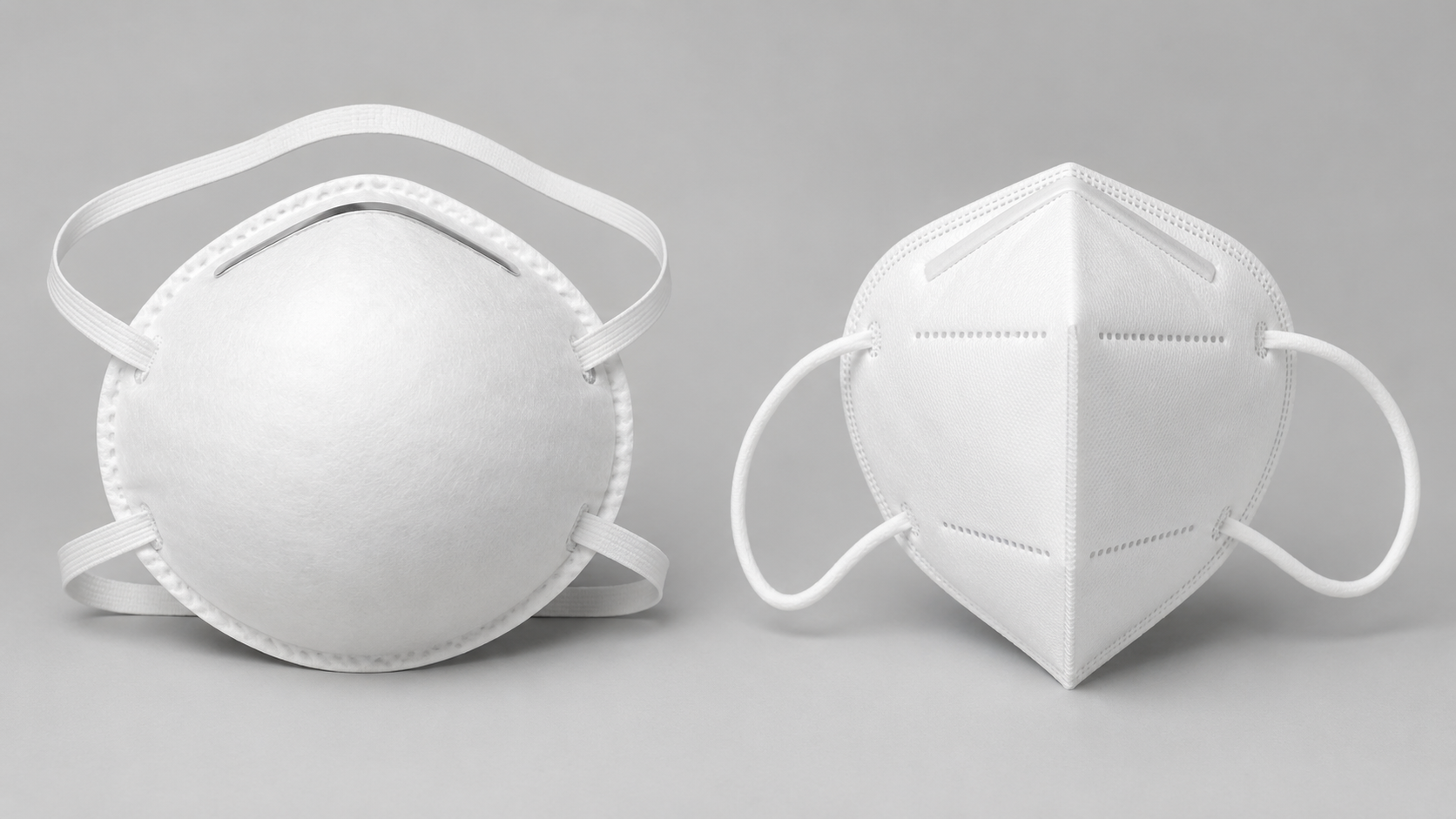
An N95 is designed to filter airborne particles and fit closely against the face. The number 95 indicates that the respirator can filter at least 95 percent of the particles used during standardized testing.
A NIOSH-approved N95 has been evaluated by the National Institute for Occupational Safety and Health. NIOSH checks the respirator’s filtration performance, breathing resistance, straps, construction, and labeling before approving the product.
The seal around the face is just as important as the filter itself. Smoke-filled air can enter through gaps around the nose, cheeks, or chin. A properly worn N95 directs most inhaled air through the filter material instead of allowing it to leak around the edges.
N95 respirators usually have two head straps, which can create a more secure fit than masks that rely only on ear loops.
Can a KN95 Help?
A KN95 is designed to provide a similar level of particle filtration, but it follows a Chinese standard rather than the U.S. NIOSH approval system.
A genuine KN95 that fits closely can help reduce exposure to wildfire smoke particles. However, many KN95s use ear loops, which may not provide the same tight seal as an N95 with head straps. Product quality can also vary, so it is important to purchase respiratory protection from a reliable source.
When available, a properly fitted, NIOSH-approved N95 is generally the preferred choice. A legitimate KN95 may still provide useful protection when an N95 is unavailable.
Why Surgical Masks Are Less Effective
Surgical masks are designed mainly to reduce exposure to large droplets, splashes, and sprays. They are commonly used in healthcare settings, but they are not designed to seal tightly around the face.
Because surgical masks fit loosely, air can enter through openings along the sides, top, and bottom. During a wildfire smoke event, fine particles may pass through these gaps as the wearer breathes.
The material in a surgical mask may capture some particles, but the loose fit makes the level of protection less dependable.
The main difference is simple:
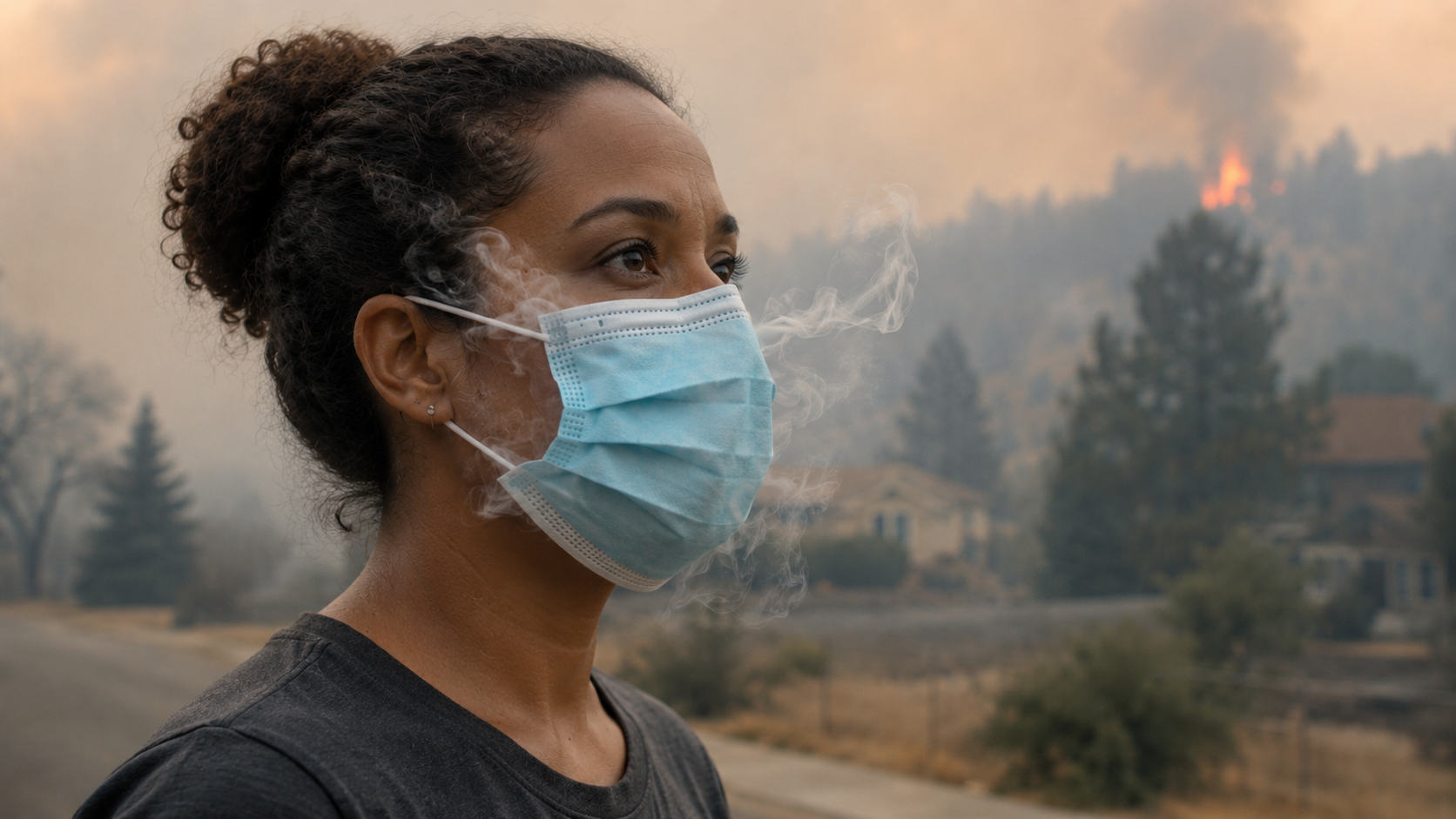
An N95 is designed to filter inhaled air and create a close facial seal. A surgical mask is not.
Getting the Best Fit
A respirator must be worn correctly to provide meaningful protection.
- Cover both the nose and mouth.
- Press the nosepiece firmly around the bridge of the nose.
- Position the straps according to the manufacturer’s instructions.
- Check for air leaking around the edges.
- Avoid placing facial hair between the respirator and the skin.
- Replace the respirator when it becomes wet, dirty, damaged, or difficult to breathe through.
Even a high-quality respirator will provide limited protection if it does not fit properly.
Respirators Do Not Remove Every Wildfire Hazard
N95 and KN95 respirators are designed to filter particles. They do not remove gases such as carbon monoxide and cannot make dangerous fire conditions safe.
A respirator should never be used as a reason to remain near an active wildfire, enter a hazardous area, or ignore evacuation instructions.
People with heart or lung conditions may find respirators more difficult to breathe through. They should speak with a healthcare professional about safe use, especially during extended wear or physical activity.
The Bottom Line
Surgical masks are not the best option for wildfire smoke because they do not form a reliable seal around the face.
A properly fitted N95 provides stronger protection by combining efficient particle filtration with a close facial fit. A well-fitting, authentic KN95 can also help, but its performance depends on product quality and how well it seals.
Respiratory protection works best as part of a broader smoke-safety plan. Monitor local air quality, reduce time outdoors, improve indoor filtration, use portable air cleaners when appropriate, and follow public health and emergency guidance.
Take the Next Step
Preparing before wildfire smoke arrives can make a meaningful difference. Review your building’s filtration, ventilation, and air-cleaning strategies, and make sure proper respiratory protection is available when needed.
Visit the IAQA website to explore additional indoor air quality resources, connect with qualified IAQ professionals, and learn how IAQA members are helping create healthier indoor environments.