
Can HVAC Filtration Help Reduce Airborne Microplastics?
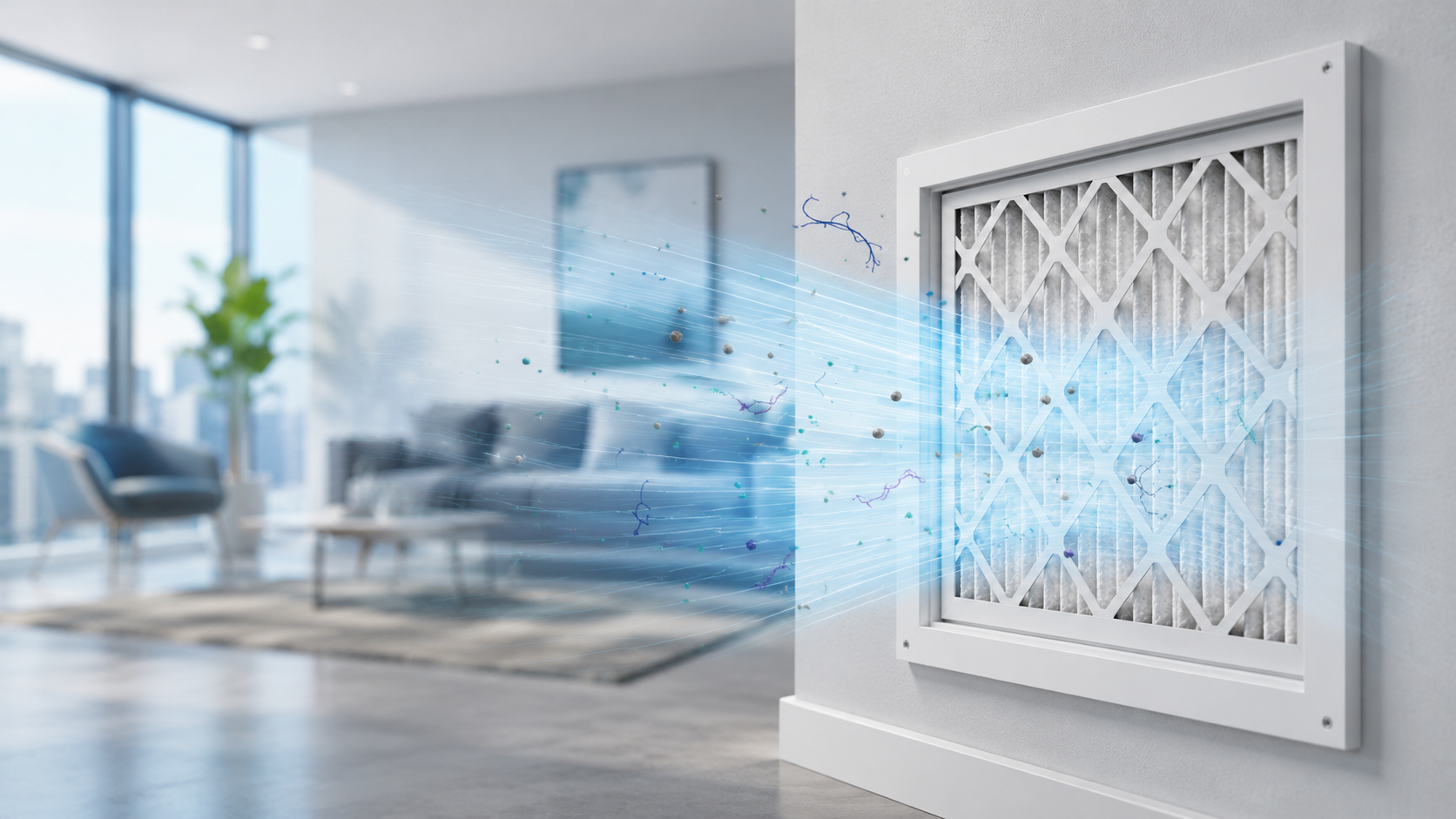
Microplastics are becoming part of the indoor air quality conversation. While many people think of microplastics as something found in water or food, research is also looking at how small plastic particles and fibers may move through the air inside homes, offices, schools, and other buildings. Indoor environments are increasingly recognized as an important pathway for airborne microplastic exposure, although methods and findings are still developing.
For IAQ professionals, one practical question is worth asking: Can HVAC filtration help reduce airborne microplastics?
The answer is yes, filtration may help reduce airborne particles, including some microplastics. But it is important to understand what filtration can do, what it cannot do, and why proper maintenance matters.
What Are Airborne Microplastics?
Microplastics are very small plastic particles, generally smaller than 5 millimeters. Indoors, they may come from synthetic textiles, carpets, upholstery, furniture, packaging, electronics, plastic-based materials, and settled dust.
Some microplastics can become airborne through normal building activity. Walking, cleaning, opening and closing doors, using HVAC systems, or disturbing soft materials can move particles from surfaces into the air.
Because indoor spaces are enclosed, these particles may settle, recirculate, or build up in dust if they are not managed through source control, cleaning, ventilation, and filtration.
How HVAC Filtration Fits Into the IAQ Picture
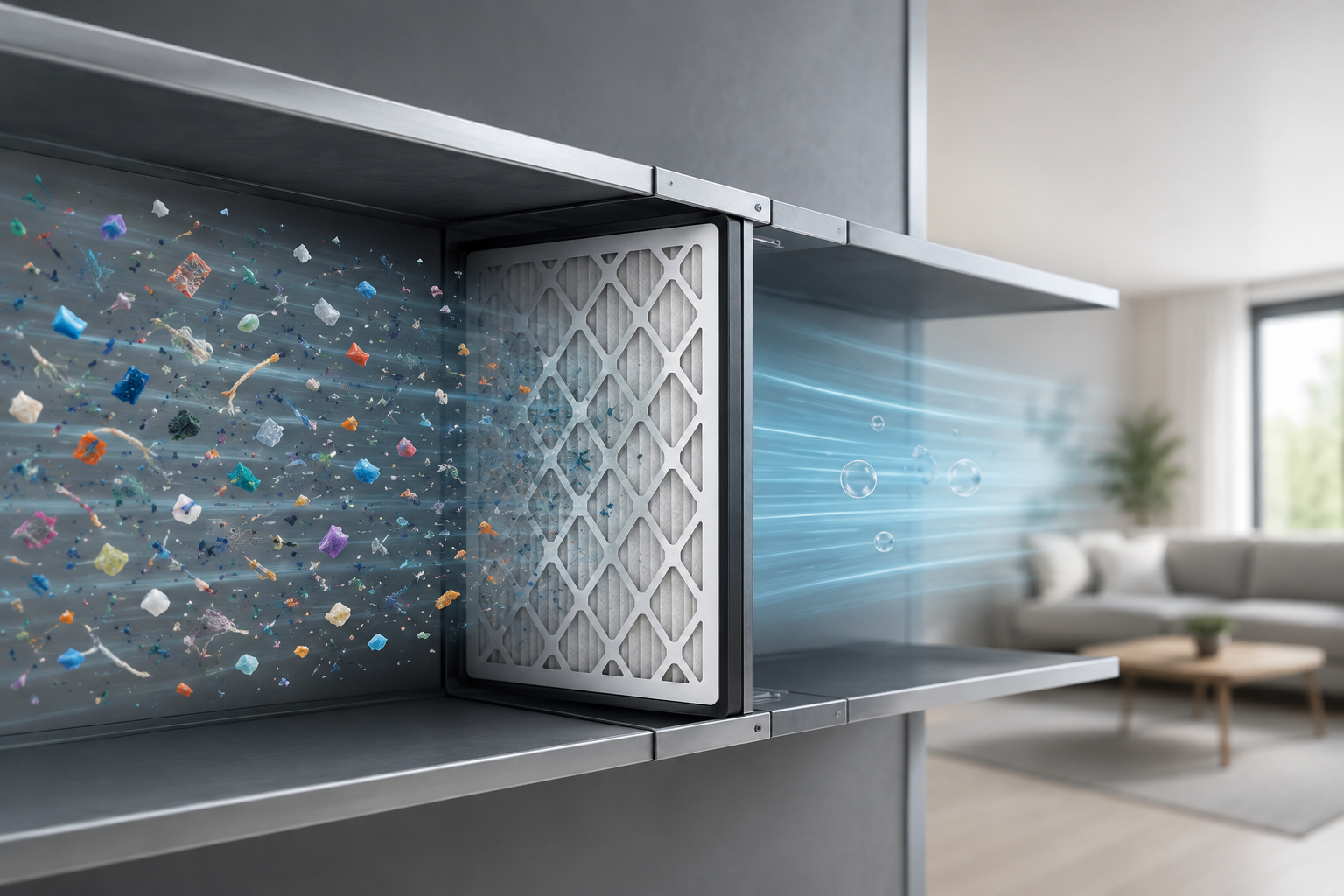
HVAC filters are designed to capture particles from air moving through the system. Depending on the filter rating, system design, air flow, installation, and maintenance, filtration can help reduce the amount of particulate matter circulating indoors.
This matters because airborne microplastics are part of the broader particle conversation. They may vary in size, shape, and material. Some may be large enough to settle quickly, while smaller particles and fibers may remain suspended longer and move through indoor air.
A good HVAC filtration strategy may help capture some of these particles, especially when filtration is properly matched to the building and system.
Understanding MERV Ratings
Many HVAC filters are rated using MERV, which stands for Minimum Efficiency Reporting Value. MERV ratings help describe how well a filter captures particles within certain size ranges. ASHRAE Standard 52.2 is the commonly referenced method for evaluating filter performance by particle size range.
In general, higher MERV ratings capture smaller particles more effectively. ASHRAE has recommended MERV 13 filters where systems can accommodate them, and notes that many relevant indoor particles fall within the 1 to 5 micron size range.
However, a higher MERV filter is not always automatically better for every system. If the filter creates too much resistance, it may reduce airflow or place stress on equipment. IAQ professionals should consider system compatibility before recommending or installing a higher-efficiency filter.
What About HEPA Filtration?
HEPA filtration is another important part of the conversation. According to the U.S. Environmental Protection Agency, HEPA filters can theoretically remove at least 99.97% of airborne particles at 0.3 microns, including dust, pollen, mold, bacteria, and other particles.
Most standard residential or commercial HVAC systems are not designed to use true HEPA filters without special equipment or system modifications. However, portable air cleaners with HEPA filtration may be useful in certain rooms or areas when they are properly sized, placed, and maintained.
For microplastics, this means HEPA filtration may help reduce airborne particles in the size ranges the filter is designed to capture. But it should not be presented as a complete solution or a replacement for good building practices.
Maintenance Matters
Even a good filter cannot perform well if it is not maintained.
A practical filtration plan should include:
- Using a filter that fits properly in the system
- Replacing filters on the recommended schedule
- Checking for gaps, bypass, or poor filter seating
- Making sure the HVAC system can handle the selected filter
- Keeping return vents and supply vents clear
- Evaluating whether additional portable filtration is needed in high-use spaces
Filter bypass is especially important. If air can move around the filter instead of through it, particle capture is reduced. Proper installation and routine inspection are simple but important steps.
Realistic Expectations
HVAC filtration can support better indoor air quality, but it is only one part of a larger strategy.
Filtration may help reduce airborne particles, including some airborne microplastics. But it will not remove particles already settled in dust, eliminate the source of shedding materials, or address all indoor contaminants.
A stronger IAQ approach includes:
- Source control
- Regular dust management
- Proper ventilation
- Appropriate HVAC filtration
- Portable air cleaning where needed
- Moisture and humidity control
- Routine inspection and maintenance
This balanced approach is especially important when discussing emerging topics like microplastics. The goal is not to create alarm. The goal is to help building owners, facility managers, and occupants understand practical ways to reduce exposure while the science continues to develop.
What IAQ Professionals Can Tell Clients
When clients ask about microplastics and filtration, a simple explanation may help:
“HVAC filtration can help reduce some airborne particles, including particles that may include microplastics, but it works best as part of a broader IAQ plan. The right filter, proper system compatibility, regular replacement, good cleaning practices, and source control all matter.”
The Bottom Line
HVAC filtration can help reduce airborne particles indoors, and it may play a role in reducing some airborne microplastics. But filtration should be presented with realistic expectations.
For IAQA members and IAQ professionals, microplastics are another reminder that indoor air quality is connected to building materials, occupant behavior, cleaning practices, ventilation, filtration, and ongoing maintenance.