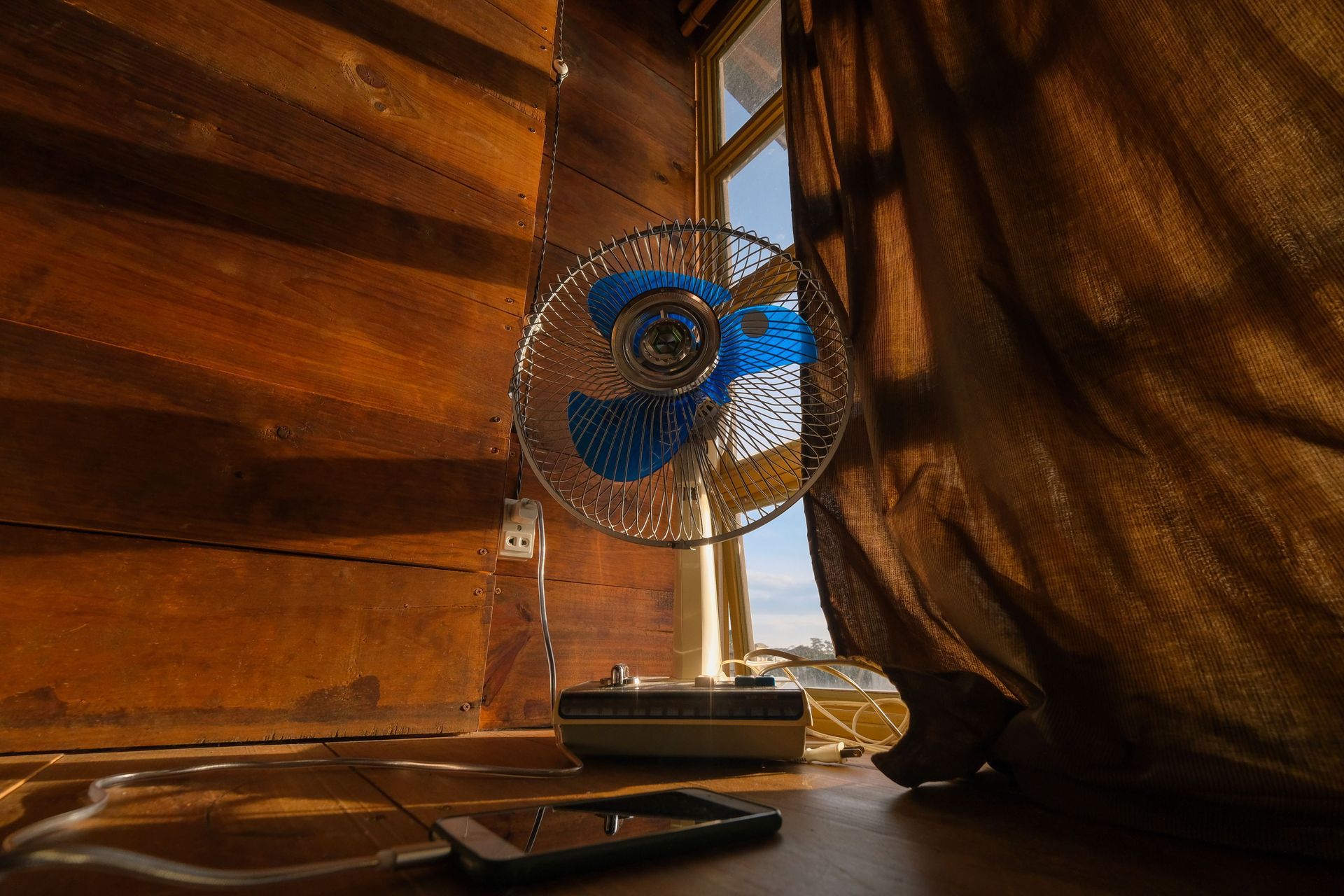

Air Purifiers vs. Proper Ventilation: What Does Your Building Really Need?
If you've ever walked into a stuffy room and wondered, "Should I just buy an air purifier?" You're not alone. Air purifiers are popular, easy to buy, and heavily marketed. But here's the truth: an air purifier and proper ventilation are not the same thing, and one cannot replace the other.

Let's break it down in simple terms.


What Does an Air Purifier Do?

Think of an air purifier like a vacuum cleaner, but for the air. It pulls in the air inside your room, filters out dust, pollen, smoke particles, and other tiny pollutants, and then pushes cleaner air back out.


Air purifiers are great at:

  • Capturing fine particles like dust and allergens
  • Reducing smoke and wildfire-related pollution indoors
  • Filtering pet dander and mold spores


But here's the catch: an air purifier only cleans the air that's already inside your building. It doesn't bring in any fresh air from outside.


What Is Proper Ventilation?

Ventilation is the process of swapping out stale indoor air with fresh outdoor air. It's like opening a window, except in most buildings, it's done through carefully designed systems like HVAC units, exhaust fans, and air ducts.


Good ventilation:

  • Brings in fresh air and removes stale, CO₂-heavy air
  • Dilutes indoor pollutants that build up over time
  • Controls humidity, which helps prevent mold growth
  • Keeps air moving throughout the whole building


Without proper ventilation, pollutants from cleaning products, furniture, cooking, and even the people inside the building accumulate, and no air purifier can fully solve that problem.


So What's the Difference, Really?

Here's a simple way to think about it:

Air Purifier Proper Ventilation
What it does Cleans indoor air Exchanges indoor air with fresh outdoor air
Removes CO₂? ❌ No ✅ Yes
Brings in fresh air? ❌ No ✅ Yes
Filters particles? ✅ Yes Partially (with good filters)
Covers whole building? Usually one room Whole building

What Does Your Building Actually Need?

The honest answer: both, working together.


Ventilation is the foundation. Every building needs a steady supply of fresh outdoor air to keep occupants healthy and alert. Without it, CO₂ levels rise, people feel tired, and pollutants build up over time.


Air purifiers are a valuable layer on top of that. They're especially useful during wildfire smoke events, allergy season, or in spaces with specific contamination concerns, but they are a supplement, not a substitute.

A common mistake building managers make is buying air purifiers to solve an IAQ problem that is actually a ventilation problem. If your building feels stuffy, people are getting headaches, or CO₂ levels are high, more air purifiers won't help. You need better airflow.


When Should You Call an IAQ Professional?

If you're not sure whether your building's air quality issues are a filtration problem, a ventilation problem, or something else entirely, that's exactly where a certified indoor air quality professional comes in.


IAQ professionals can assess your building, identify the root cause of air quality issues, and recommend the right combination of solutions, not just the easiest one to sell.


Air purifiers are useful tools. Ventilation is a non-negotiable necessity. Healthy indoor air comes from using both correctly and knowing which problem you're actually solving.


When in doubt, get it assessed by someone who knows the difference. Find a Pro today and make sure your building's air quality is in the right hands.
October 27, 2026
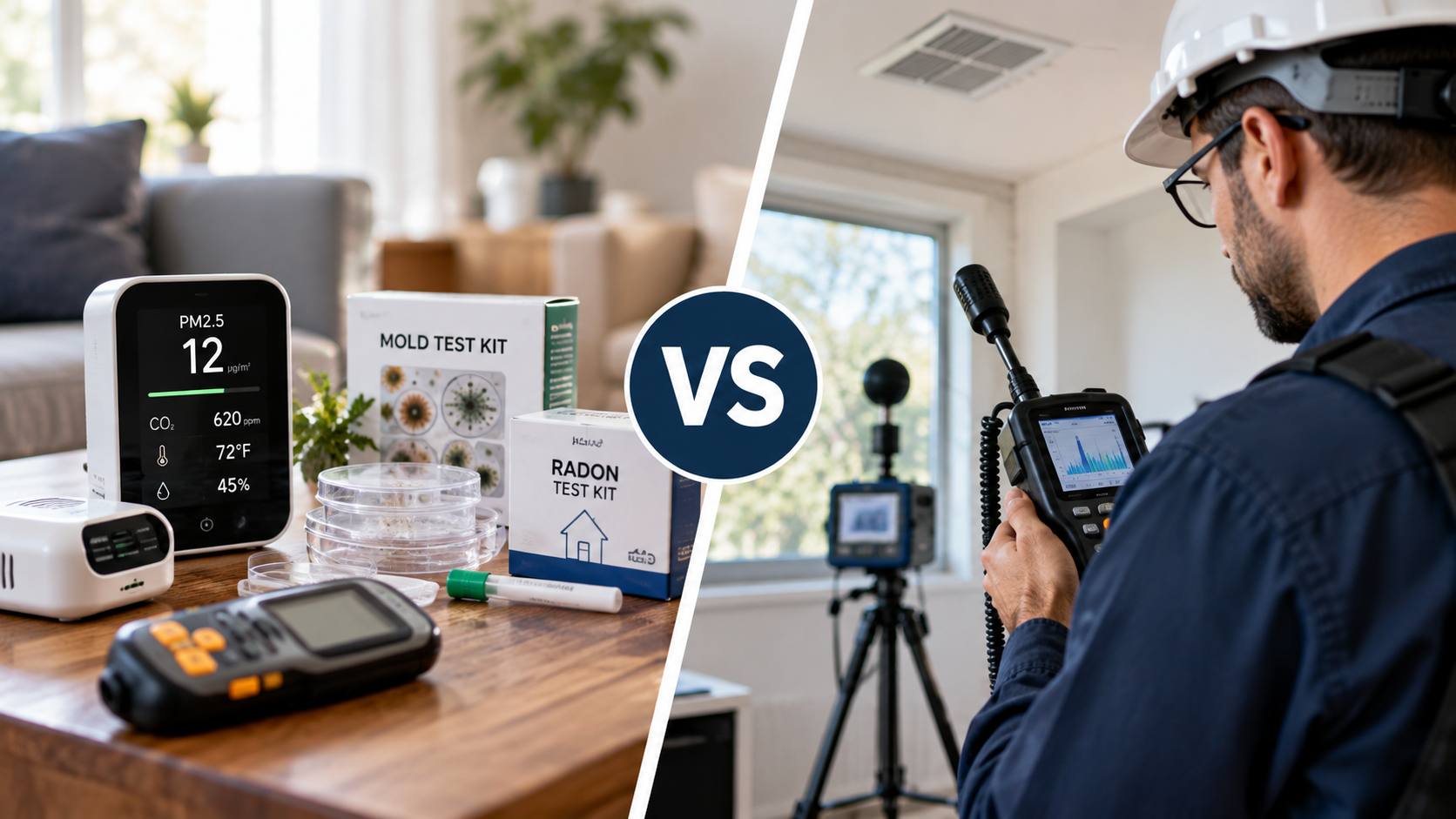
Indoor air quality (IAQ) plays an important role in maintaining comfortable, healthy indoor environments. From airborne particles and moisture to ventilation problems and chemical pollutants, many factors can affect the air inside homes, offices, and commercial buildings. With affordable air quality monitors and DIY testing kits widely available, it's easier than ever to collect information about indoor conditions. But how reliable are these tools, and when is it time to consult an indoor air quality professional? Understanding the difference between DIY testing and professional IAQ investigations can help you make more informed decisions. What Is DIY Indoor Air Quality Testing? DIY indoor air quality testing involves using consumer-grade devices or testing kits to check certain indoor environmental conditions without hiring a professional. Common DIY tools include: Air quality monitors: Track indicators such as particulate matter (PM2.5), carbon dioxide (CO₂), temperature, and humidity, depending on the device. Mold testing kits: Collect samples that may be analyzed for mold, although results can be difficult to interpret. VOC monitors: Provide estimates or indicators of certain volatile organic compounds. Humidity meters: Help identify moisture conditions that may contribute to mold growth. Radon monitors: Measure radon gas (which is odorless, colorless and radioactive) concentrations indoors, either with short-term tests or long-term monitoring. These tools can be useful for observing trends and identifying conditions that may need further attention. However, they have limitations, particularly when it comes to accuracy, sampling methods, and interpreting results. What Does an IAQ Professional Do? An indoor air quality professional takes a more comprehensive approach to evaluating indoor environmental concerns. Rather than relying on a single reading or test result, a qualified professional considers multiple factors, including building history, ventilation, moisture conditions, occupant activities, and potential pollutant sources. A professional IAQ investigation may involve: Evaluating HVAC systems and ventilation performance. Inspecting for moisture intrusion and conditions that support microbial growth. Using appropriate instruments and sampling methods. Reviewing occupant concerns and patterns. Interpreting findings within the context of building conditions. Recommending practical next steps based on the available evidence. The goal is not simply to collect numbers. It is to understand what those numbers mean and how they relate to the building and its occupants. 
By Admin User • October 12, 2026
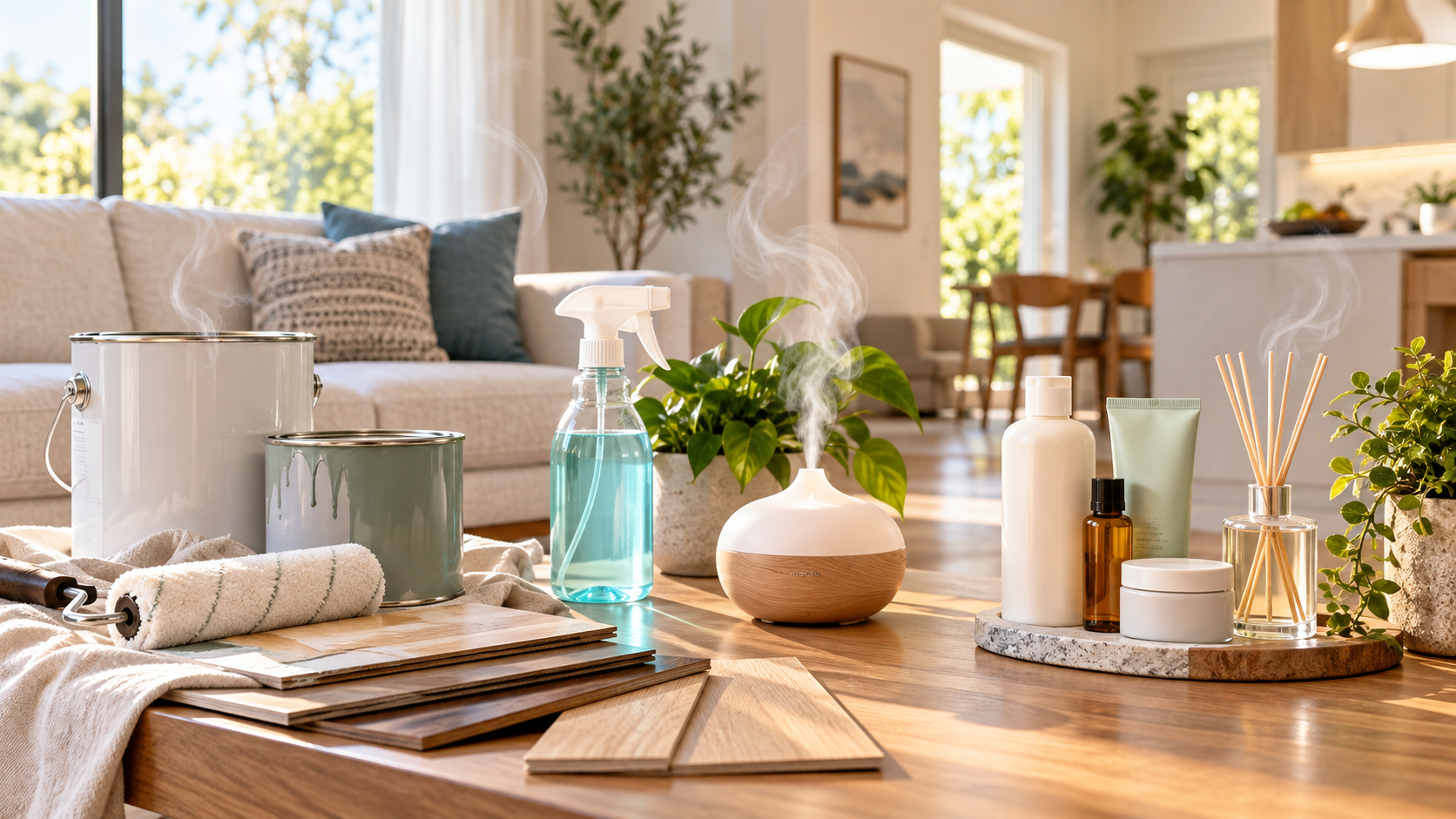
Indoor air can contain pollutants from sources we encounter every day. One important group is volatile organic compounds, or VOCs . What Are VOCs? VOCs are chemicals that can evaporate into the air from certain products and materials. Indoors, they may be released while a product is being used or, in some cases, continue to be emitted from materials and furnishings over time. Understanding potential VOC sources is an important part of evaluating and managing indoor air quality . Where Do VOCs Come From? VOCs can come from a wide variety of products and materials commonly found in homes, schools, offices, and other buildings, including: Paints, coatings, adhesives, and solvents Cleaning and disinfecting products Air fresheners, fragrances, and personal care products Furniture and cabinetry Flooring and carpets Building and renovation materials Stored fuels, chemicals, and hobby products Renovation activities may temporarily introduce additional VOC sources as new paints, flooring, adhesives, furnishings, and other materials are brought into a building. How Can VOC Exposure Be Reduced? Managing VOCs begins with understanding and controlling their sources. Building occupants and managers can consider increasing ventilation when appropriate, following manufacturer instructions, properly storing chemicals, and selecting lower-emitting products when practical. Because indoor environments vary, the presence of an odor does not necessarily tell you which VOCs are present or at what concentration. When Should You Consider an IAQ Professional? If there are persistent odors, occupant concerns, or questions about potential indoor pollutant sources, an indoor air quality professional can help evaluate the building, identify possible sources, and determine whether additional investigation or testing is appropriate. Learning where indoor pollutants come from is an important first step toward creating healthier indoor environments.  Looking for more information about indoor air quality? Visit IAQA for educational resources and information from the indoor air quality industry.
September 28, 2026
When a Fan Does More Than Move Air: How Settled Dust Can Affect Indoor Air Quality